
Guide, published 3 October 2026
How to Build an Airbnb Business Without Owning Property
On leases, not loans. How the model actually works, and what it takes to do it properly. Written by Jordan Pham.
The short version
Most people hear “Airbnb business” and assume the first step is a deposit and a mortgage. It isn’t. You can run short-stay properties you don’t own, on leases rather than loans. As at 27 August 2026, BNB Success ran 83 of them in Melbourne this way.
Quick answer: yes, you can build a real Airbnb business without owning any property. The model is called rental arbitrage: you lease a property with your landlord’s written consent, then run it as a short-term rental instead of a long-term tenancy, where your state, council and building allow it. Success comes down to pricing, guest experience and systems, not the deed. BNB Success runs 83 Melbourne properties this way, teaches the model through its Mentorship and sets properties up for clients through Done-For-You.
You don’t need to buy property to run a real Airbnb business in Australia. Leasing a property and subletting it short-term, with written landlord consent, is a legitimate, established model where your state, council and building allow it.
BNB Success runs 83 properties in Melbourne on leases, not mortgages, and has been teaching Australians to do the same since 2024.
The skill that actually matters isn’t finding the lease, it’s running the property like a small hospitality business: pricing, guest experience, cleaning and turnover systems.
There are two ways in: learn it and do it yourself through the Mentorship, or have the team set a property up for you through Done-For-You.
Landlord consent in writing, state or council registration where it applies, and the right insurance all need to be in place before the first guest checks in.
Profit comes from the gap between fixed rent and nightly income, not property appreciation, so the numbers need to be run honestly before signing anything.
Done properly, it’s a way into short-stay property without buying one.
What does “Airbnb without owning property” actually mean?
There are three ways to make money on Airbnb without a mortgage, and they get mixed up constantly. Knowing which one you’re actually doing matters, because the legal and financial picture is different for each.
Rental arbitrage
You sign a standard residential lease, get your landlord’s written consent to sublet, and list the property short-term. You carry the lease and the risk; the upside is the gap between what you pay in rent and what the property earns per night.
Co-hosting
You manage someone else’s Airbnb for a fee or a revenue share. You never hold the lease and never carry the tenancy risk, but you also don’t control the asset the way an arbitrage operator does.
Done-For-You setup
A team like BNB Success’s finds the property, negotiates the lease with the owner’s written OK for short stays, furnishes it and launches the listing, with you signing off on each step. See how the programs are structured for the full breakdown.
Why the model works
It works when the numbers work, one property at a time. That comes down to the spread, and to planning for the quiet months as well as the busy ones.
The economics: rent against nightly revenue
The entire model rests on one number: the spread between your fixed weekly rent and what the property earns across a month of nightly bookings, after cleaning, platform fees and a vacancy buffer. Run conservatively, with a realistic occupancy rate rather than a best-case one, that spread is what pays the operator.
Plan for the season
BNB Success’s own portfolio data, built from running 83 properties in one city, shows a clear seasonal swing, with summer running at about twice winter per property. A well-priced listing works around that rather than getting caught out by it. The full breakdown is in the Melbourne short-stay market report.
Two ways to get started
Not everyone wants to do the legwork themselves. BNB Success structures its programs around that difference.
The Mentorship: learn it and do it yourself
You learn the full process, from finding a property and getting the owner’s OK to furnishing, listing, pricing and running it, with coaches checking your work as you go. There are three live calls a week and your own mentor. This suits people who want to own the skill and eventually scale past one property.
Done-For-You: we set it up for you
The team finds the property, negotiates the lease and the owner’s written OK, furnishes it and launches the listing, with you signing off on each step. This suits people who’d rather not do the legwork themselves. Full details on each path are on the programs page.
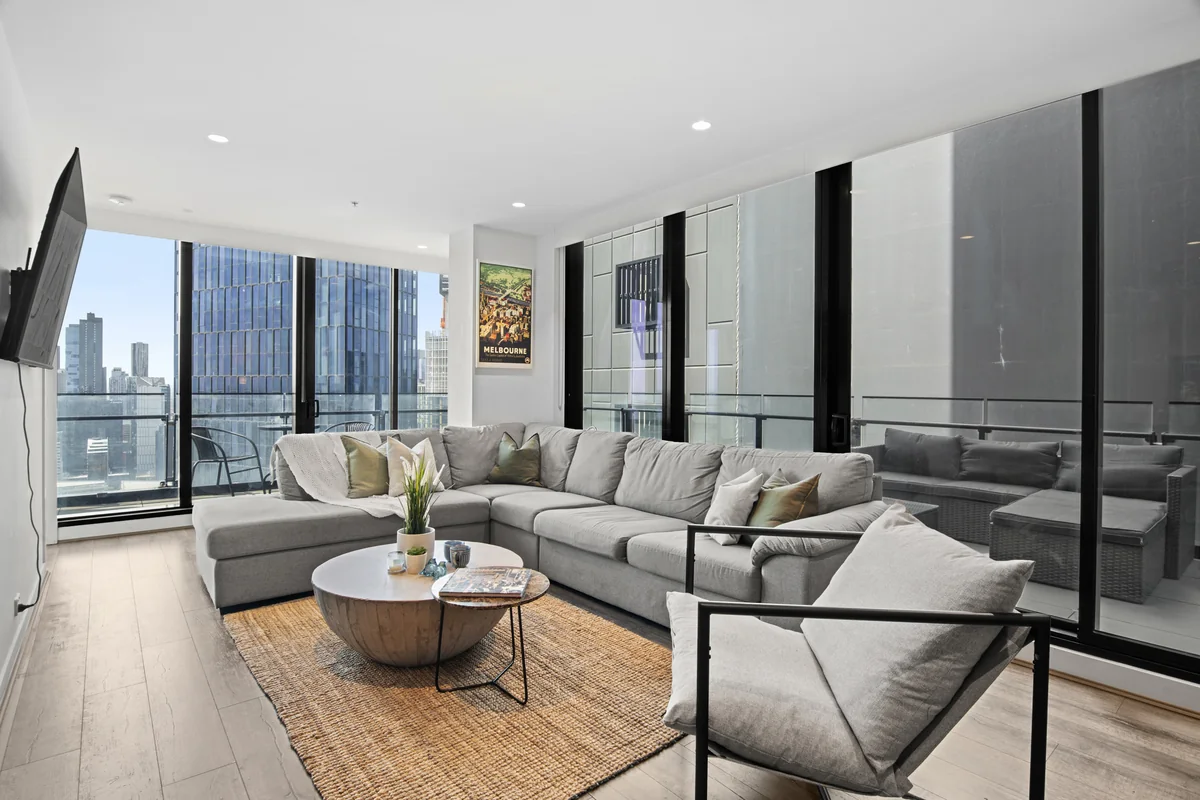
One of the properties we run in Melbourne.
What you need before you list your first night
Skipping any one of these isn’t a shortcut, it’s a breach waiting to surface. Rules differ by state and council, so check the current ones for your property before you sign.
Written landlord consent
In NSW, Victoria, Queensland and South Australia, tenancy law requires the landlord’s written consent to sublet. In WA it depends on what the lease says. A verbal yes doesn’t meet the written-consent requirement.
Registration, where it applies
NSW and WA have state short-term rental registers. Victoria has no register but charges a 7.5% short stay levy. Tasmania requires a planning permit number or exemption statement on listings. Elsewhere it varies by council.
The right insurance
Standard renters’ and landlord policies usually exclude short-term subletting, so check the product disclosure statement and get cover written for short stays. Airbnb’s AirCover damage protection isn’t an insurance policy and has its own conditions, so it doesn’t replace one.
The building’s by-laws
In NSW and Victoria, an owners corporation can vote to ban short stays in lots that aren’t the host’s principal residence. Queensland is different: by-laws generally can’t restrict the type of residential use. Always read the by-laws first.
A pricing and operations system
The margin lives in occupancy and nightly rate, not in finding the lease.
How BNB Success does it differently
Running one Airbnb on a lease is manageable with a spreadsheet. Running 83 of them needs infrastructure, and that’s the part most guides on this topic skip entirely.
Technology: pricing at scale
Pricing 83 properties by hand isn’t realistic, so the business runs on NightlyIQ, the pricing software we built, which checks every listing nightly against a few hundred comparable properties and flags what to change. More on how it works is on the technology page.
Proof: real results, not projections
Claims about Airbnb income are cheap. On the member stories page, members talk through their own properties in their own words, rather than a single best-case example.
Credibility: reported outside our own channels
Jordan has been on A Current Affair and in The Sydney Morning Herald. See the coverage on the media page.
Common mistakes people make chasing this model
Signing a lease before asking the landlord about Airbnb. Consent needs to come first, not after you’ve committed to twelve months of rent.
Using a generic nightly rate instead of adjusting for seasonality, events and day-of-week demand, which is where a lot of the achievable margin goes.
Under-budgeting for cleaning and turnover, which quietly eats into margin.
Skipping proper insurance to save on premiums, then facing an uninsured claim worth vastly more.
Treating the first property as the whole business, rather than as a test of the systems needed to run a second and third.
From Jordan
“The biggest misconception is that this is a property game. It’s not, it’s an operations business that happens to run out of a leased property. The members who do well treat pricing, cleaning and guest communication as seriously as any hospitality manager would. The ones who struggle usually signed a lease first and tried to work out the compliance and the pricing afterwards, instead of the other way around.”
Jordan Pham, Co-founder, BNB Success
Is this model right for you?
This works best for people who want a property-based income without the deposit, the loan approval process or the years of waiting for growth to catch up. It suits people willing to treat it as a genuine small business, not a passive side income, at least for the first property.
It suits less well if you can’t commit five to ten hours a week while you look for your first place, or if a landlord conversation and a registration form feel like more friction than you’re willing to deal with. Read the founders’ own path, including the early setbacks, on the About page, and browse our research on what actually moves the numbers before deciding.
FAQs
Can you really run an Airbnb without owning property in Australia?
Yes. Leasing a property with your landlord’s written consent and running it short-term, known as rental arbitrage, is an established model in Australia. Whether it’s allowed for a particular property depends on the lease, your state’s tenancy law, council rules and the building’s by-laws.
What’s the difference between rental arbitrage and Done-For-You?
In arbitrage on your own, you find, secure and set up the property yourself. In Done-For-You, BNB Success’s team finds the property, negotiates the lease and the owner’s written OK, furnishes it and launches the listing, with you signing off on each step.
How much money do you need to get started?
There’s no mortgage deposit, but you do need enough for a bond, furnishing and a cash buffer to cover rent during the setup period before bookings ramp up. For a first property we put it at about $10,000 to $15,000, covering the bond, some rent in advance and the furniture. The exact figure depends on the property.
Do I need my landlord’s permission to Airbnb a leased property?
Yes. In NSW, Victoria, Queensland and South Australia, tenancy law requires the landlord’s written consent before you sublet. In WA the lease itself may allow subletting, ban it or require consent. A verbal yes doesn’t meet the written-consent requirement.
Is this legal in every Australian state?
The model can work across Australia where the lease, tenancy law, council and building allow it. Most states’ tenancy laws require the landlord’s written consent, and in WA it depends on the lease. Registration, levies and night caps vary: NSW and WA have state registers, and Victoria charges a short stay levy. Always check the current rules for your state and council.
How much can you realistically earn running an Airbnb this way?
It depends heavily on location, property type and how actively it’s managed. Margins are thinner than many online guides suggest once rent, registration, insurance and cleaning are all accounted for, so run your own numbers rather than relying on someone else’s best case.
What’s the difference between the Mentorship and Done-For-You?
The Mentorship teaches you to do it yourself, with coaches checking your work. Done-For-You has the team set a property up for you, from finding it to taking the listing live, with you signing off on each step.
Do I need hospitality experience to do this?
No, but you do need to be willing to treat pricing, cleaning and guest communication as an ongoing operational job, not a one-time setup task.
How is BNB Success different from doing this alone?
The main differences are the pricing technology, the coaching and Done-For-You support, and published results from running a real portfolio rather than a single property.
Is now a good time to start an Airbnb business in Australia?
It depends on your numbers and your state’s rules. Rules have tightened in some states, including Victoria (a 7.5% short stay levy and owners corporation bans from 1 January 2025) and WA (a state register from 2025), so getting the compliance and insurance right from day one matters more now than it did a few years ago.
General information only, not legal, financial or tax advice. Short-stay rules change often, so check the current rules for your state, council and building before you sign anything.
Start with the free training.
Watch it first. If it sounds like you, apply and book a call with our team. We’ll talk through your budget, your time and which state you’re in.